

Every day, thousands of clinical decisions hinge on one deceptively simple factor: clinical collaboration. Yet inside hospitals, the way clinicians connect, communicate, and coordinate care is still held together by phone calls, fragmented messaging tools, handwritten notes, and, too often, luck.
Our research into communication across clinical environments reveals an urgent truth: healthcare teams are working harder than ever to collaborate efficiently, but the systems meant to support them are not keeping pace.
The reality behind the scenes
Interviews with frontline clinicians like doctors, nurses, pharmacists, and administrative staff highlight a persistent challenge: finding the right person at the right time remains one of the biggest barriers to safe, efficient care. As one senior nurse told us:
“I often spend more time chasing people than caring for patients.”
Instead of streamlined workflows, clinicians describe a patchwork of methods: multiple phone calls to reach an on-call colleague, duplicate messages sent via email and internal systems “just to be sure,” and increasing reliance on consumer apps like WhatsApp because official tools are too slow or disconnected. These workarounds may feel pragmatic, but they introduce serious risks.
A 2023 Joint Commission report found that communication failures contribute to nearly 70% of sentinel events in hospitals. This is a sobering reminder that fragmented communication is not just inconvenient, it is dangerous.
The lack of integration between messaging tools and patient records compounds the problem. Critical decisions made over the phone often leave no trace until something goes wrong. Clinicians also struggle to access patient information quickly and safely, especially when moving between systems or coordinating across care boundaries. This is no longer about convenience, but about patient safety. When communication is scattered and data access is inconsistent, delays, missed follow-ups, and misunderstandings become inevitable.
A market ready for transformation

The global market for clinical communication and collaboration tools is evolving rapidly. Health systems are no longer satisfied with fragmented messaging apps or siloed paging systems. Instead, they seek unified platforms that integrate messaging, task management, consults, and patient data in one seamless environment.
Gartner’s Critical Capabilities for Clinical Communication and Collaboration report underscores this trend, noting that organisations increasingly prioritise solutions that embed communication directly into clinical workflows rather than treating it as an isolated function. This shift is driven by the need for safety, efficiency, and compliance.
When communication tools operate independently of patient records, clinicians are forced to rely on memory or manual workarounds, increasing the risk of errors. In contrast, platforms built on open standards such as openEHR and FHIR enable real-time access to patient context, observations, medications, and alerts from a single source of truth. These standards ensure interoperability, auditability, and granular security, transforming communication from a basic utility into a clinical asset.
The difference is profound: A standalone messaging app may reduce phone calls, but a fully integrated clinical collaboration platform can improve care coordination, reduce duplication, and strengthen accountability. As one physician told us:
“I don’t need another chat tool. I need a system that knows my patient.”
This sentiment reflects a growing consensus: communication must be embedded in the clinical workflow, not bolted on as an afterthought.
From messaging to meaning: How Better turns communication into clinical intelligence
One of the most powerful insights from our research is clear: communication should not live in isolation. When messages, consultations, and decisions are captured and linked to a patient’s record, powered by a unified, standards-based platform, healthcare moves beyond fragmented conversations to true clinical intelligence.
This is the essence of our vision at Better and the Postmodern EHR vision championed by our CEO, Tomaž Gornik. Traditional EHRs have locked data into rigid silos for decades, limiting innovation and creating inefficiencies. The Postmodern EHR approach breaks that mould. It combines the stability of existing systems with an open, modular architecture built on openEHR and FHIR, enabling health systems to innovate without abandoning their legacy investments. As Tomaž often says:
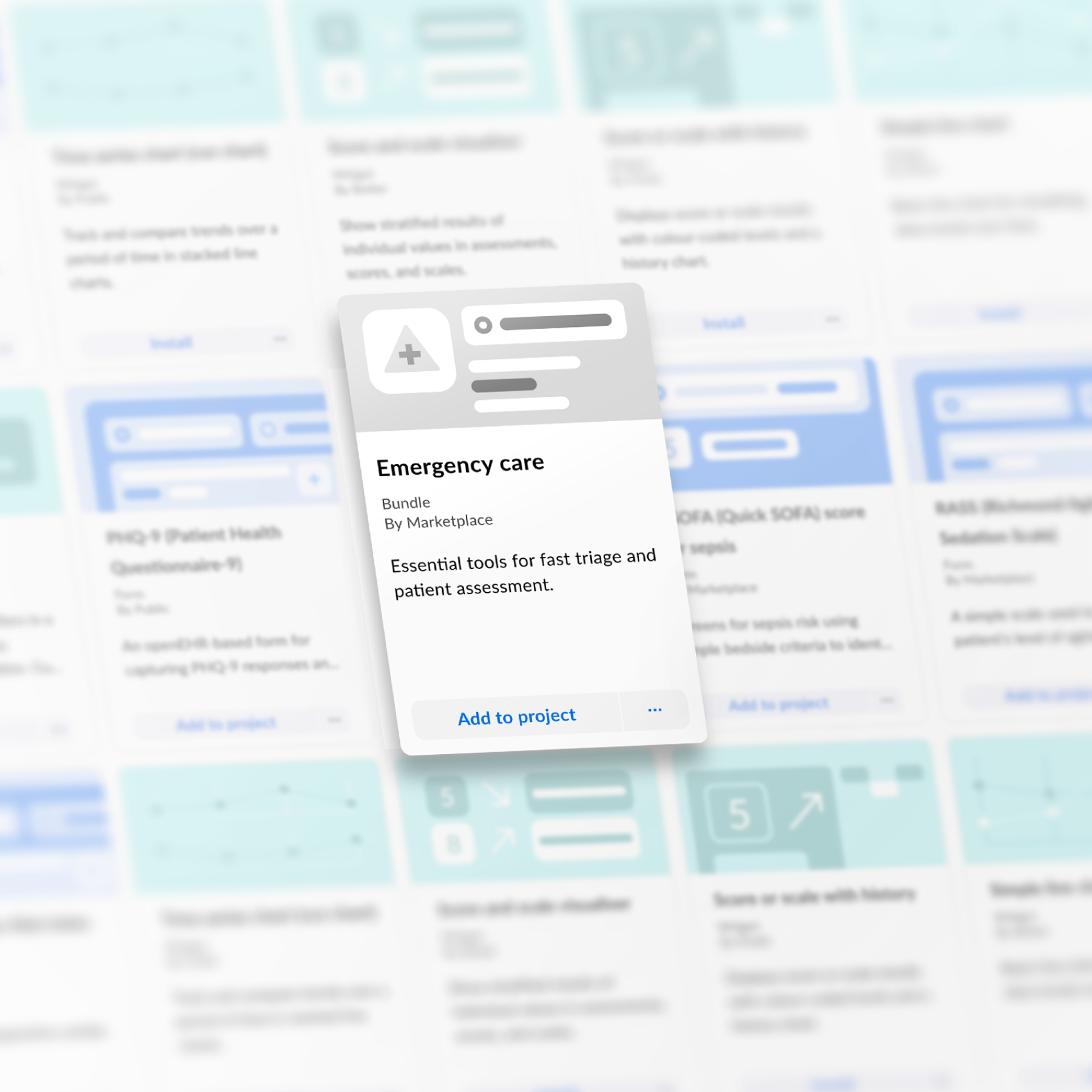
“Healthcare needs an app store of innovation built on open platforms, not another closed box.”
Imagine a secure message that allows you to share the latest vitals because it draws data from an openEHR repository. Picture a consult request seamlessly linked to the patient’s unified record, eliminating fragmented inboxes. A pharmacist’s query about a high-risk medication becomes part of the Medication Administration Record (MAR), while a wound photo enriches the clinical timeline.
This approach reflects our mission: data for life. By capturing clinically meaningful communication and linking it to structured patient data, we create continuity, transparency, and trust. It is the difference between “another messaging app” and a solution that truly supports collaborative care. Learn more about Tomaž Gornik’s vision in our webinar.
Designing clinical collaboration with care

Our interviews reveal a nuanced reality: while clinicians welcome better communication tools, they worry about unintended consequences. Should every message become part of the official record? Will over-documentation create unnecessary burdens or even fear of accountability?
These concerns are valid and echo findings from studies on clinical communication, which warn that poorly designed systems can increase cognitive load rather than reduce it.
The solution is not an “all or nothing” approach. Instead, research points to the need for tiered communication models that balance immediacy with compliance. For example, ephemeral chat channels can support real-time coordination without cluttering the patient record, while promotable messages allow clinically significant decisions to be elevated into structured documentation. This flexibility ensures that communication enhances care rather than overwhelming clinicians.
Equally important is contextual access to patient data. When messages are enriched with relevant clinical information, such as vitals, medications, or alerts, decision-making becomes faster and safer. A study published in BMJ Quality & Safety highlights that context-aware communication reduces handover errors and improves continuity of care. Designing tools that integrate these principles is essential for creating systems clinicians trust and actually use.
Why collaboration matters
Healthcare systems are under unprecedented strain. Staffing shortages, rising patient acuity, and increasingly complex care pathways have created an environment where every delay or misstep can have serious consequences. Research from the World Health Organization and the Joint Commission consistently identifies communication failures as a leading contributor to adverse events and inefficiencies in care delivery.
Improving clinical collaboration is one of the few interventions that can deliver impact across multiple dimensions: reducing clinician burden, improving patient outcomes, strengthening safety and compliance, and increasing operational efficiency. Unlike large-scale infrastructure reforms, communication improvements, when built on interoperable standards and aligned with real clinical workflows, can be implemented quickly and scaled effectively.
Our ongoing research confirms this potential. Clinicians repeatedly emphasise that better communication tools are not a luxury but a necessity. As one hospital physician told us:
“Every minute I spend chasing information is a minute I’m not caring for my patient.”
The message is clear: modernising communication is not optional. It is foundational to safe, connected care.
What is next
Our research so far has uncovered critical insights into the challenges and opportunities of clinical collaboration. But this is only the beginning. The next step is turning these findings into solutions that genuinely improve workflows and patient safety.
To do that, we need your voice. We are inviting clinicians, healthcare leaders, and IT professionals to share their experiences, frustrations, and ideas. Every perspective helps us design tools that fit real-world needs, not just theoretical models.
If you have ever faced broken handovers, inbox overload, or missing context during patient care, we want to hear from you. Your feedback will shape the next phase of our work: building a collaboration module that is intuitive, interoperable, and clinically meaningful. Together, we can redefine what connected care looks like. Share your feedback or book an interview below.