
Your team has a clear clinical use case and is ready to explore it, but access to the platform they need may still sit behind a procurement process that takes months to conclude. While the project moves through approvals, the development work that would turn that idea into something testable can remain on hold, even though what the team discovers during those first weeks could help shape the project before larger commercial decisions are made.
That gap costs teams not only time, but learning opportunities also. Giving teams earlier access to a clinical application development platform changes the sequence by allowing technical discovery to begin while there is still time to refine requirements, test assumptions, and use what the team learns to inform the decisions that follow.
Why earlier access matters for clinical application development
Even well-defined requirements contain assumptions until someone starts building against them. An API that looked straightforward in the vendor documentation may behave differently in practice, an archetype may need to be adapted to the workflow, or an integration may expose dependencies that were difficult to see in an architecture diagram. These are not necessarily signs that the original plan was wrong; they are the kinds of details that become clearer once development begins and the team can work with the technology itself.
Starting earlier therefore matters for more than speed. It moves technical discovery to a point where solution architects, technical product managers, and developers can still act on what they learn, rather than asking them to anticipate every requirement, integration challenge, and workflow detail before anyone has had the opportunity to build.
In practice, several things change:
- Assumptions get tested, not just documented. A data model, integration approach, or workflow that looks right on paper can be tested against the platform while the project is still taking shape, giving the team time to adjust before those assumptions become embedded in a wider implementation plan.
- Requirements get more concrete. It is easier to define what the solution needs once the team has explored the available capabilities, built against them, and identified where additional work or decisions are required.
- Integration issues surface earlier. A mismatch between existing systems and the platform’s data model is easier to account for during early development than after the scope, architecture, and implementation plan have already been agreed.
- Stakeholders get something tangible to react to. A working application, integration, or demo gives people something they can explore, question, and improve, helping turn abstract feedback into more specific decisions about what the eventual solution needs to do.
- The eventual decision can draw on evidence. When the organisation considers a larger commitment, the conversation can include what the team has already learned through development rather than relying only on what was expected to happen before the work began.
Earlier access is particularly valuable because it does not have to create a new dependency of its own. If the underlying platform is based on open standards and the data remains extractable, teams can test how the technology works for their use case without locking the organisation, or the information created along the way, into a proprietary system before a larger decision has been made.
A clinical application development platform your team can start using now
The Digital health builder programme is designed to make that earlier start possible. Instead of requiring a larger enterprise engagement before the team can access the technology, Builder provides direct subscription access to the same Better Platform used by enterprise customers, rather than a stripped-down sandbox or separate prototyping environment that would later need to be left behind.
With a Builder subscription, your team gets:
- Full access to Better Platform, built on clinically validated openEHR and FHIR data models from day one, so interoperability is part of the foundation rather than something added afterwards.
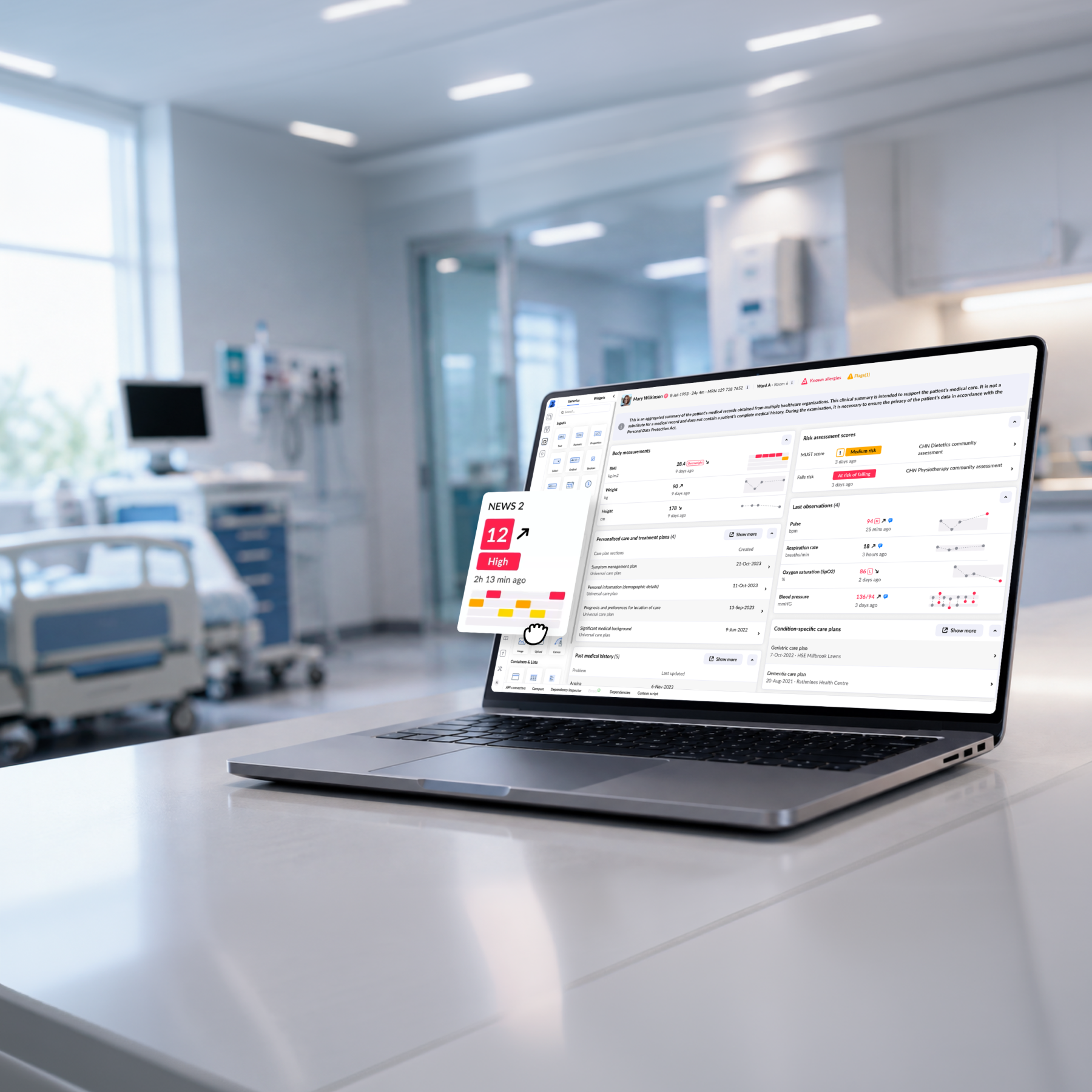
- Better Studio for building and iterating on clinical applications.
- Better Design System so the team can work with reusable healthcare-specific design components rather than starting the interface from a blank page.
- Full Hive learning access, with resources for working with Better Platform, openEHR, and FHIR.
- Advisory sessions and development support when the team needs additional guidance.
- Unlimited users and projects in a cloud-hosted environment, allowing everyone who needs to contribute to work within the same programme without access being constrained by seat count.
- Data that stays with you. Better Platform is built on open standards, and your data remains extractable at any time rather than becoming tied to a proprietary format or application.
What you build with that access depends on what you need to learn or deliver, whether that means a proof of concept, a specific integration, a working demo, or a full clinical application prototype. Builder does not prescribe the route; it gives your team access to the platform when they are ready to start.
How clinical application development can work alongside procurement
Builder is not a way to bypass procurement, and larger commitments will still go through the appropriate governance processes within your organisation. Those processes continue to have an important role in making sure the eventual decision is properly evaluated and approved. The difference is that clinical application development does not have to remain blocked until those processes have concluded.
When the team can begin development earlier, what it learns can become part of the later decision rather than something that only emerges once a larger commitment has already been made. Procurement can still do the job it is there to do, while the organisation brings clearer requirements, a better understanding of the technical fit, and practical evidence from early development into that conversation.
If your team has a clinical use case ready to explore, a lengthy procurement timeline does not have to determine when development begins.
Start a Builder subscription and give your team direct access to Better Platform.
FAQ
What is a clinical application development platform?
A clinical application development platform provides the infrastructure, clinical data models, interoperability capabilities, and development tools that teams need to build software for clinical workflows without creating the underlying healthcare technology foundation from scratch. Better Platform is built on openEHR and FHIR, so development teams work with clinically validated, interoperable data models as part of that foundation.
What should a clinical application development platform include?
A clinical application development platform should provide more than application-building tools alone. Teams need a reliable foundation for structured clinical data, interoperability with existing systems, reusable data models and design components, and the ability to build and iterate without creating each part of the underlying infrastructure themselves. Support for open standards such as openEHR and FHIR can also help keep clinical data reusable and reduce dependence on proprietary formats, while learning resources and technical support can help teams get productive with the platform more quickly.
How do openEHR and FHIR work together in clinical application development?
openEHR and FHIR can play complementary roles in clinical application development. openEHR provides a structured, vendor-neutral approach to modelling and storing longitudinal clinical data, while FHIR is widely used to exchange information between healthcare systems through standardised APIs and resources. Using both allows development teams to build applications on structured clinical data while connecting those applications with the wider healthcare technology environment.