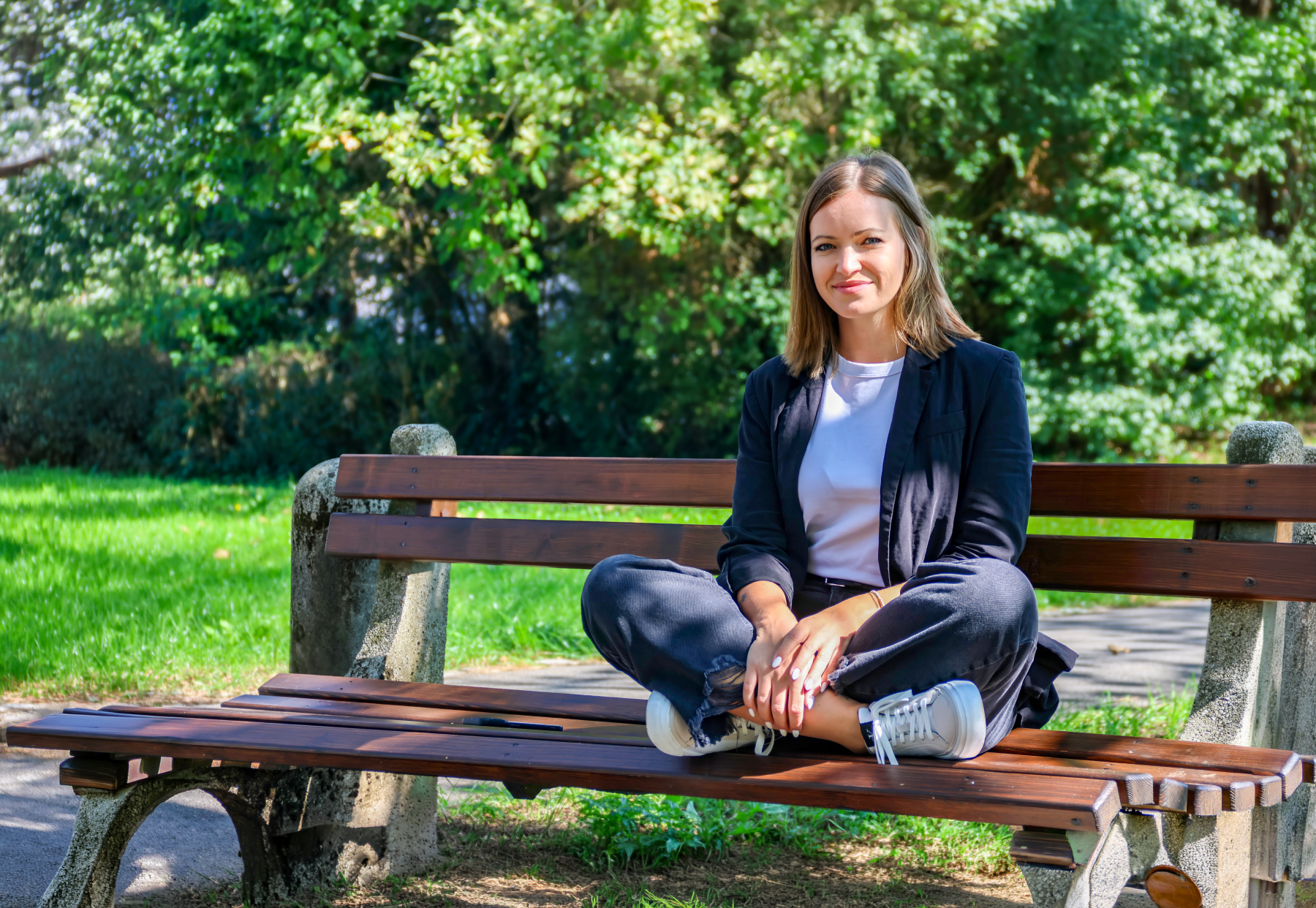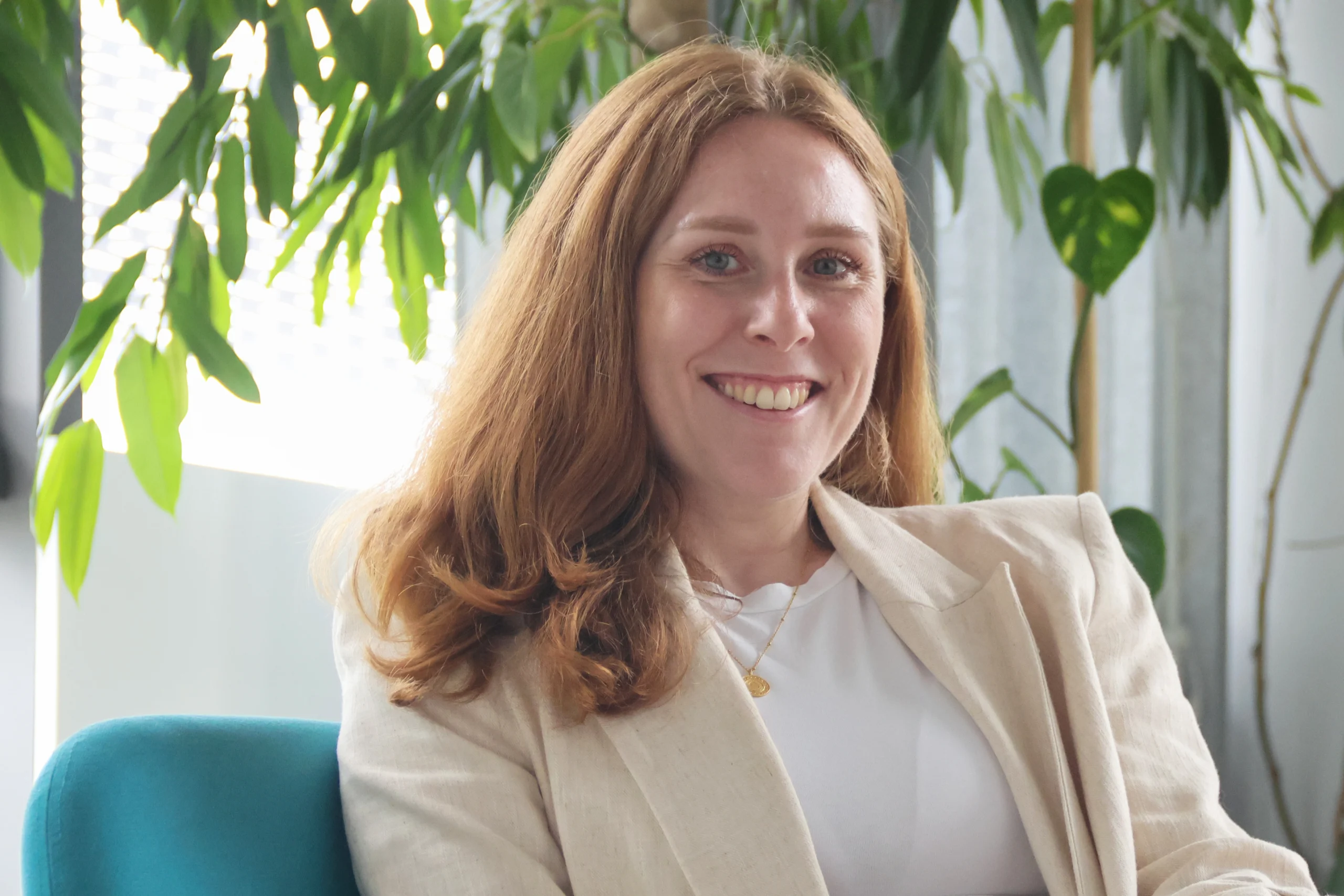


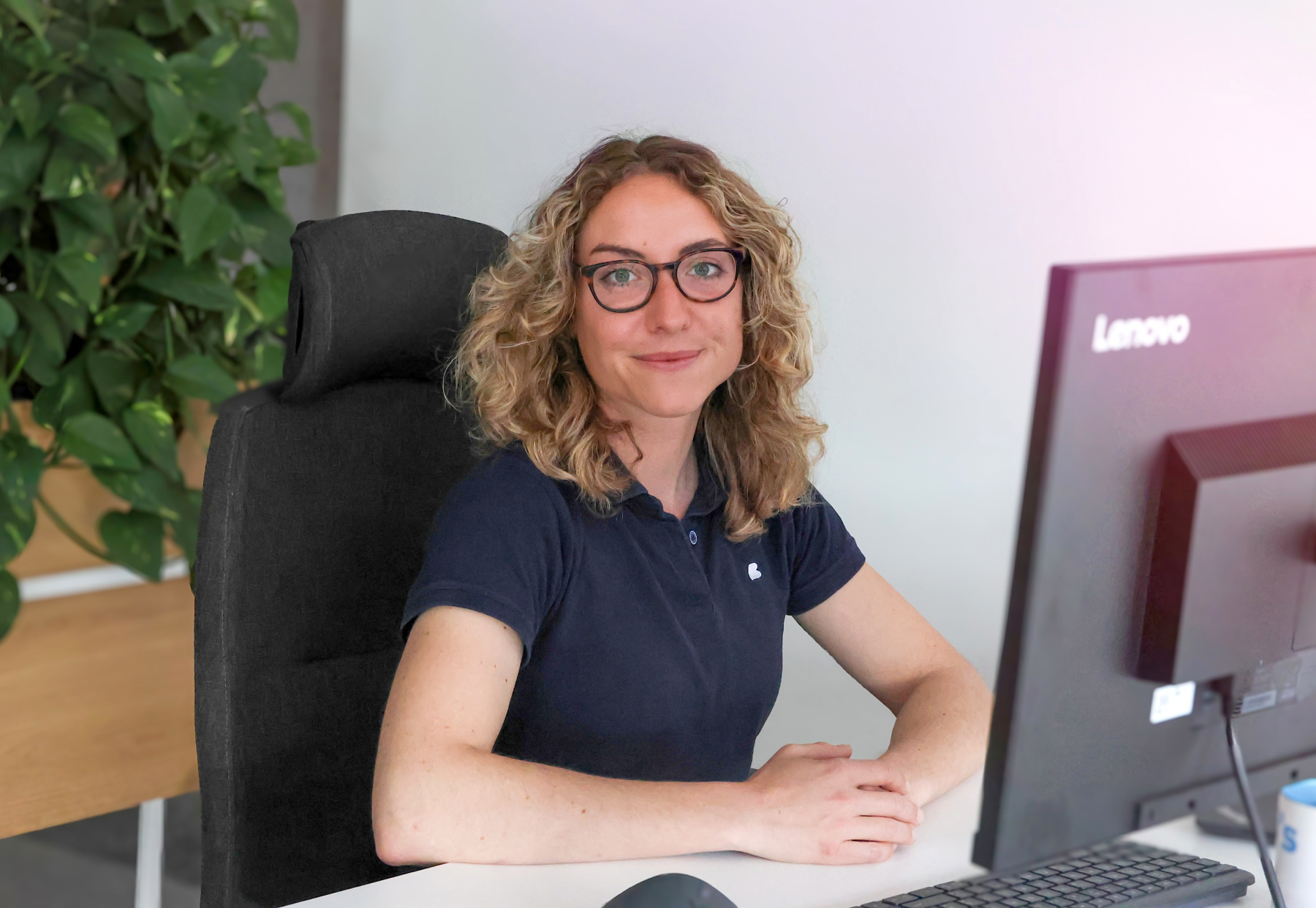
“There’s something really motivating about working on a product that empowers clinical staff to digitise their own workflows, build their own applications, and be actively involved in shaping the tech they use every day,” is what Maruša Hrobat told us about her work.
Maruša Hrobat is a UX researcher in our Better Studio team. Her main assignment is to gather feedback, research, analyse, evaluate, and test the product with our users to make our low-code development tool even better suited to them. “We need to understand who we are designing for, what their needs are, where they struggle with, and what they value, before a single design decision is made or a line of code is written,” she told us. Before working at Better, Maruša was working as an R&D Engineer at BBC, where she gained valuable experience and learned that “user research is a fundamental part of any design and development process, not an optional extra“. Maruša is also the initiator of our “Better bake-off” initiative and an adventurous person who likes to spend as much time as possible outdoors. Get to know her in the interview below.
You have had an interesting journey so far. You started at Marand, moved to BBC to work as an R&D Engineer, and are now back at Better. What were your main assignments at the BBC, and how did your time there shape your perspective on UX?
After completing an undergraduate degree in Psychology at Edinburgh University, followed by a postgraduate degree in Human-Computer Interaction at UCL, I joined BBC R&D on a 2-year graduate scheme. As part of the scheme, I completed 3 eight-month placements in different research teams across R&D, gaining experience with the full range of technologies the BBC works with and working with brilliant colleagues along the way. I was investigating the effect of head-tracked spatial audio on the listening experience, exploring how the BBC could measure the value it delivers to its audiences beyond traditional metrics, and working on a test platform for iPlayer. My main responsibilities were to develop an analytics system, organise and run trials with selected members of the UK public, and collect qualitative and quantitative data to help other researchers and content creators answer their research questions.
My time at the BBC gave me the opportunity to experiment with a wide range of technology, research methods, and data analysis techniques, which really broadened my toolkit. But more than that, it showed me that user research is a fundamental part of any design and development process, not an optional extra. Nothing ever got passed on to the production team without some form of evaluation with users first, and that really made a lasting impression on me.
What brought you back to Better, and what is the main difference between the two working environments?
After spending 3 years at BBC R&D and 8 years abroad altogether, I decided to take some time off work in the form of a career break – my forever weekend, because every day felt like one.

Without hesitation, I decided to spend that year in Slovenia, because I had missed my family, our lovely little country, and its beautiful nature. I enjoyed my time here so much that when the year was up, I simply decided not to go back to the UK.
That left me looking for opportunities in Slovenia, which is a much smaller market than the UK. Better was a natural fit as I had already worked there, so I knew the company, the product, and the people. But beyond familiarity, I was genuinely excited by how the company has evolved and where it is heading. Better, and Studio specifically, had grown into something much more ambitious, and the problems being solved – building clinical applications on open standards for healthcare systems around the world – felt meaningful in a way that was hard to walk past. I also knew that Better places a real emphasis on UX, so I felt my psychology, HCI, and user research background could be of use here.
The two environments are quite different. The BBC is a large, mature organisation with extensive resources, strong processes, and a real culture of cross-team collaboration and knowledge sharing. People have the time, resources, and support to do their work properly, and that shows. Better is at a much earlier stage of that journey – still growing, still establishing processes, with a faster pace and a much shorter turnaround time. But what I really enjoy about Better is how direct one’s impact is; you can see quite clearly how your work shapes the product and the people using it.
As a UX researcher in the Studio team, what does your role look like in practice? How do you bring user insights into the development of Better Studio?
In practice, I draw on a mix of qualitative and quantitative methods – analytics, surveys, think-alouds, user interviews, and user group sessions where our most engaged users can share feedback and co-design new ideas with us. My research typically starts at discovery – understanding the problem space before any designing begins – and then continues into evaluation, testing prototypes and feeding findings back into the next iteration. I do a lot of internal testing with colleagues and try to get as many external evaluations as possible, too. Once I’ve gathered and analysed the data, I distil the key insights and make sure they feed into our tasks, priorities, and broader product discussions.
But honestly, research doesn’t stop at the write-up; a big part of my role is also being the voice of the user in conversations, making sure their perspective, their frustrations, and values are always part of the picture, wherever decisions are being made.
What excites you most about working with Better Studio, especially when it comes to empowering users to build their own solutions?
What excites me most is that the product we are building genuinely matters. Healthcare has long struggled with outdated, hard-to-use, and poorly interoperable technology, and Studio is trying to solve that. There’s something really motivating about working on a product that empowers clinical staff to digitise their own workflows, build their own applications, and be actively involved in shaping the tech they use every day. That kind of empowerment is rare, and it’s a big part of what makes this work so meaningful and rewarding.
What does a “good” user experience feel like to you?
For me, good UX is about designing products and experiences that are useful, usable, intuitive, and accessible – where all users can achieve their goals with minimal friction, while the interaction feels clear and enjoyable. But none of that happens by accident. I firmly believe that good UX can’t be designed in a vacuum; it must be researched first. We need to understand who we are designing for, what their needs are, where they struggle, and what they value, before a single design decision is made or a line of code is written. And then, building on that foundation, good UX brings users into the process itself, because co-design is what ensures the end result actually fits their world. No matter how talented the designers, developers, or product people in the room are, research and collaboration with users are what separate a product that works from one that people actually want to use.
Healthcare systems can be complex and demanding. How do you make sure that user experience remains intuitive and human-centred in such an environment?
By never losing sight of the user, no matter how complex the system gets. In practice, that means investing heavily in research throughout the entire design and development process. We spend a lot of time on on-site observations, because there is really no substitute for seeing how clinicians and other members of staff actually work in their environment, and what problems they experience.
We are also lucky to have clinicians, pharmacists, and other healthcare professionals within our company, and tapping into their expertise helps bridge the gap between us and the realities of healthcare systems that we don’t experience firsthand. Because when you layer technology on top of an already complex domain, it’s very easy for the user to get lost in that complexity – and that’s exactly when it matters most to bring them back to the centre of every decision.
If you have to picture yourself in 10 years, what are your aspirations both in the UX field and personally? What kind of impact would you like to have?
In 10 years, I hope to still be doing work that I genuinely love – getting to ask super interesting research questions and using the full range of research methods to learn from the smartest people in the room, which are always the users themselves. I would particularly love to do a lot more research in the wild; going into real clinical environments, observing how people actually work and interact with technology in their own context. I think there’s so much to learn from that kind of closeness to users, and it would really strengthen our ability to make informed decisions and identify opportunities to provide products and services that solve real user problems.
But beyond my own practice, what I would really love is to see user research become a much more embedded part of how we work across the organisation, not just within the Studio team, but everywhere. That means building a real culture of knowledge sharing around research, and empowering people across teams to conduct research themselves. A bit like it was at BBC R&D, where no project moved forward without some form of user evaluation. That’s the kind of culture I would love to help build here, and ultimately the impact I want to have – making the user’s voice a larger and more consistent part of every design and development decision we make.
You are also one of the brains behind our “Better bake-off”. Why do you see such initiatives as important in the working environment?
The Better bake-off was inspired by my time at BBC R&D, where something similar existed, and I thought it was a brilliant way to bring colleagues together – chatting about work, life, and things they had learned recently, all over cake and biscuits. I firmly believe that initiatives like these, which aren’t strictly work-related, are really important for employee wellbeing, satisfaction, and the overall experience of being part of a company. They make it easier to get to know colleagues, which in turn makes collaboration and asking for help feel much more natural.
And I think that matters enormously, because very few great things are the result of one person working alone – they are almost always the product of really good collaboration. Better has grown quite a lot, and we are now spread across four floors, so such opportunities to mix with colleagues from other departments are really valuable. We rely on each other constantly, and these moments of connection make that easier. Finally, I truly believe work should also be a bit of fun and play… and also who doesn’t like cake?
What do you like to do in your free time, and what takes your mind off work?
In my free time, I love being in the mountains – that’s where I go to get away from the crowds and clear my head. In the summer, that means lots of alpine and rock climbing, and in the winter, I do lots of ice and winter climbing, and ski touring. This autumn I’m hoping to take up paragliding as well, so I can combine it with climbing and hiking. I really try to be active and outside as much as possible, and in my spare time, I very rarely open my laptop – I close it and go outside. Slovenia is a wonderful place for that, which is honestly one of the reasons I stayed here.
What does Better mean to you?
To me, Better is an organisation I have watched grow and evolve in really positive ways, and I feel genuinely proud when I tell people I work here. That sense of pride is something I also felt at the BBC – both are organisations with a mission you can really stand behind. It also means a bunch of brilliant people whom I genuinely love working with, it means having the opportunity to do something useful with my skills and experiences, and it means being part of something that’s making healthcare truly better.