
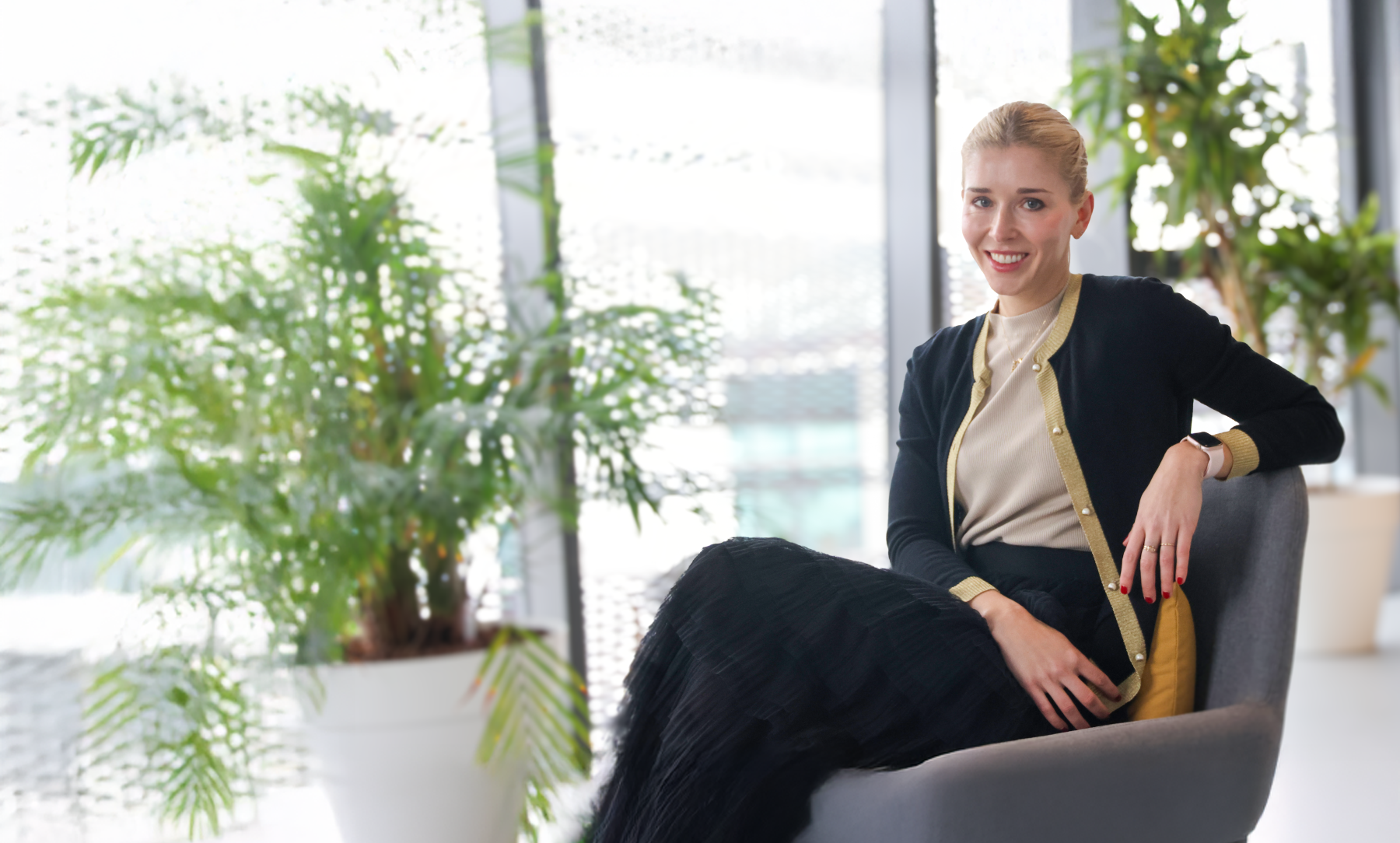
“Working for Better allows me to truly contribute to something meaningful – making a positive impact in a highly complex field like healthcare, which is deeply rewarding,” is how Dora Žmuc feels about her work at Better.
Dora is a medical doctor by profession, who later transitioned to digital healthcare. She told us she always wanted to be involved in healthcare in a way that could impact the system and the environment, and healthcare IT is the perfect way of doing that. She works as a Product Manager in the Better Meds team, where she combines her clinical expertise with developing and implementing the medication management solution that improves efficiency, safety, and decision-making.
Dora is also a mother of two, an active runner, and a co-founder of a German healthtech startup. Read the interview and get to know her better.
You work as the Product Manager in the Better Meds team. What does your typical working day look like, and what parts of your work excite you the most?
My days are a mix of planning, partnerships, sales support, and working closely with our customers and clinicians. Lately, I have also been involved with the eTTL project as a clinical lead, which is exciting because we collaborate across different teams in Better, and I get to work with people I do not otherwise work with every day. This diversity that comes with being at the intersection of healthcare, technology, and business is the part that excites me the most.
You started your career as a medical doctor and later transitioned into the digital health space. What inspired you to make that shift from clinical practice to digital healthcare, and why did you do it?
I worked as a clinician for over five years, and those years were invaluable in terms of understanding hospital environments, clinical processes, everyday challenges, pains, opportunities, and the mix of excitement and frustration that comes with patient care. But I always wanted to be involved in healthcare in a way that can impact the system and the environment. Healthcare IT is the perfect way of doing just that, because it allows me to combine clinical expertise with business thinking and product strategy.
If you could give one piece of advice to young clinicians or professionals thinking about moving into digital health, what would it be?
Learn the language of technology, but your superpower is understanding the realities of real-world workflows, patient safety risks, and the subtle challenges of care delivery. The best part is how you combine both worlds – when you use data, design, and innovation to solve problems you have witnessed at the bedside. Digital health needs people who understand both hearts and systems.

How does your experience from working directly with patients influence the way you approach shaping digital healthcare solutions like Better Meds?
I start by trying to understand the real-life challenge we are solving, and that is easier when I remember morning rounds, handovers, conversations with nurses and other doctors, and outpatient clinics. Some of the patient stories stick with you forever, and if we could help change some of those outcomes by what we do, by designing and developing better digital tools, then that is a big motivation.
You have described digital transformation as more than just implementing a new IT system. What, in your opinion, are the key ingredients for a truly successful transformation in healthcare?
First, digital tools that, on the one hand, fit naturally into clinical workflows and care pathways and, on the other hand, improve efficiency, safety, and decision-making. Part of that is also providing them with high-quality, reliable data that makes care for their patients easier because data is available when they need it at the point where they need it in a format that they need it.
Then, involving clinicians and key opinion leaders early, because lasting change happens with clinicians, not to them, and they can be a very strong opponent if they feel like being forced into anything. And being open to feedback and improvement after the implementation.
And lastly, I would say strong leadership support, because it is on leaders to create a culture where it is ok to challenge the old processes. In medicine, we say something is “eminence-based” when it has always been done that way because an eminent medical figure might have done it that way sometime in the past. It is hard for leaders to challenge those processes, to implement new ways and stay behind their decision when challenges come up during implementation.
From your perspective, what are the biggest challenges clinicians face when adopting digital tools such as ePMA systems, and how can companies like Better help overcome those challenges?
Digital tools usually affect the long-established habits and workflows, and that can be hard to get used to for clinicians, especially when they have little to no time allocated for that. They also report fatigue with switching between screens, remembering system steps, and managing alerts that can overwhelm clinicians who are already under pressure. We support them during implementation by trainings delivered at the right time, and with hands-on practice.
With AI being ever more present and important in the context of healthcare, where do you see its greatest potential, especially in the area of medication management and patient safety?
There are so many potentials. I would say AI-driven Clinical Decision Support System, those will really affect decision making and how work is done in hospitals. Medical information platforms, such as OpenEvidence are already reaching the “can’t live without it” status, I know so many doctors that use it on a daily basis. And of course, gen-AI. AI is really good at making summaries and everyone who has ever had to write a discharge letter for a patient that was in the hospital for three weeks knows how invaluable it is to have a tool that generates a discharge outline or structure in a matter of seconds.
How do you see the future of digital medication management? How will Better Meds continue to shape safer and smarter healthcare?
It is moving toward a safer, more connected, and more intelligent ecosystem in terms of true closed-loop workflows, connecting prescribing, clinical decision support, dispensing, barcode administrations, as well as monitoring outcomes. There is also a shift towards going beyond hospitals, with supporting hospital-at-home programs, home care, and home monitoring. Patients are becoming active partners in their treatments and need tools to support and monitor them. We are already addressing some of these processes such as barcoding and pharmacy system integrations. We just released our first mobile app, Mobile Meds, that will support all types of medication administrations in all settings, including patient homes and areas without connectivity.
You are also one of the co-founders of a German healthtech startup that provides digital solutions. What are your aspirations with this startup, and how do you balance the two roles?
Yes, we developed an app for digital prehabilitation, that means preparing patients for big surgeries. Major surgery can be seen as running a marathon in terms of how stressful it is for the body, and yet most people can’t even walk a set of stairs without being out of breath prior to having one. So simple exercises, nutrition, and stopping smoking, for example, make a huge difference in outcomes. Right now, I have a more consultant role, I help with clinical trials that are needed for the CE marking and with the strategic decisions, along with other investors.
You are a mother of two young boys and an active runner. How do you find balance between your professional and personal life, and what keeps you motivated every day?
My days start early and are very full. If I get an hour to myself during the day, I spend it running or in the gym. It helps me clear my mind, stay fit, and keep up with our two boys. Evenings and weekends are generally reserved for the family, we like to go hiking, make short trips, and spend time on playdates or at the playgrounds.
What does Better mean to you?
I like how the company supports individuals and teams to grow and how highly motivated people are, that is really inspiring. I feel that working for Better allows me to truly contribute to something meaningful – making a positive impact in a highly complex field like healthcare, which is deeply rewarding.