
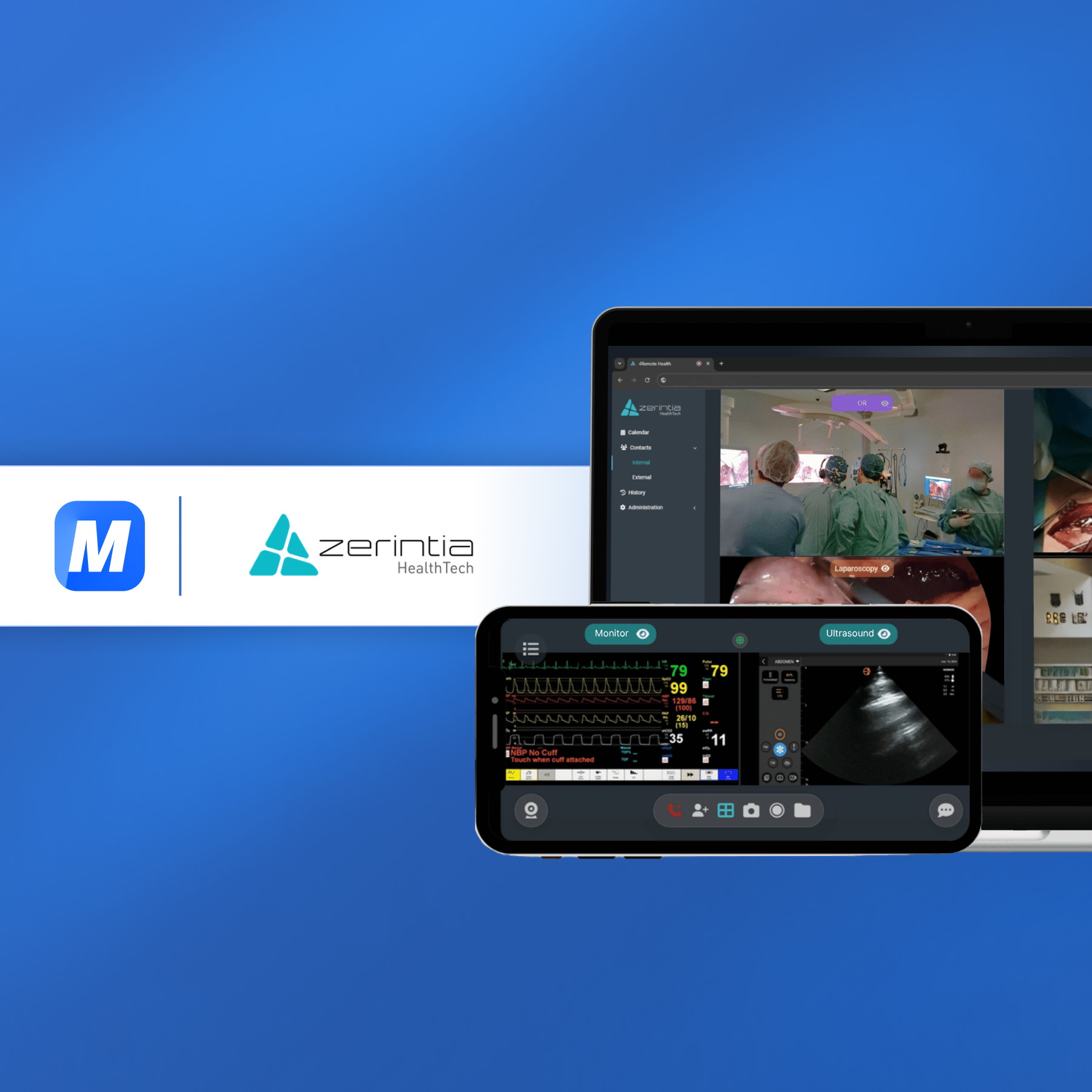
When specialist expertise is needed during surgery, critical care, an emergency response, or another live clinical situation, the expert is not always in the same place as the team delivering care. A phone or video call can connect them, but it may still leave the specialist without the clinical picture they need: the scope, monitor, imaging study, ultrasound, or camera view the on-site team is working from.
4RemoteHealth, now available on Better Marketplace, is built around that gap. Its approach shows what medical telepresence can add when remote specialist support depends not only on conversation, but on being able to see and interact with the clinical context at the point of care.
Why does remote specialist support need more than a video call?
In complex clinical environments, the information a specialist needs rarely comes from a single view. During a procedure, one camera may show the patient while another provides a laparoscopic or endoscopic feed. In critical care, the relevant picture may include bedside monitors and medical imaging. In an ambulance or emergency setting, the on-site team may need expert input while working with both the patient and live device data.
Standard video calls are built primarily to connect people, not to bring that clinical context together. The remote specialist may depend on someone in the room describing a monitor, repositioning a camera, or moving between separate tools to show different information. When guidance is time-sensitive, that extra layer of translation can make remote collaboration less useful than having access to the relevant clinical sources directly.
How does 4RemoteHealth use medical telepresence in clinical care?
4RemoteHealth was developed by Zerintia HealthTech, a Spanish digital health company focused on remote collaboration between medical professionals. The platform is designed to bring several clinical sources into the same live workspace, giving specialists in different locations a shared view of what is happening. Depending on the setting, those sources can include fixed or PTZ cameras, wearable smart glasses, laparoscopic or endoscopic video, vital-signs monitors, ultrasound, and other clinical feeds. Instead of relying on one camera view at a time, the remote specialist can follow the sources relevant to the situation within the same session.
The collaboration is also interactive. Specialists can draw or add visual markers directly onto a shared feed to show the on-site team what they mean. With a compatible PTZ camera, the remote specialist can pan, zoom, and reposition the camera themselves rather than asking someone in the room to adjust it on their behalf. That remote camera control is a particularly tangible difference from conventional video collaboration: the specialist is not limited to the view someone else has chosen for them. They can change what they are looking at as the clinical situation develops. Medical imaging can remain within the same workflow. An integrated DICOM viewer allows teams to open imaging studies, take measurements, and annotate images without leaving the session. Sessions can also be recorded, captured, and logged for later review or training.
Because the collaboration happens live, responsiveness matters. 4RemoteHealth is designed for ultra-low latency so remote specialists can follow and guide the session in real time as if they were in the room. The platform also includes AI-powered voice-to-voice translation, translating speech between languages during the session to support multilingual clinical teams.
Together, these capabilities give the remote specialist more than a window into the room. They provide a shared clinical picture that the specialist and on-site team can work from together in real time.
Where can medical telepresence support clinical teams?
The same approach can be used in different situations where expertise and the point of care are not in the same place.
- Operating theatres and procedural care: specialists can join complex procedures remotely, follow relevant camera, device, and imaging feeds, and control compatible cameras themselves to pan, zoom, or reposition the view as the situation develops.
- Critical care: teams can bring in specialist expertise across sites while sharing the clinical information needed to understand the situation.
- Ambulance and pre-hospital care: remote experts can support teams working away from the hospital while seeing the clinical sources available at the scene.
- Telementoring and medical training: experts can observe procedures, annotate what participants are seeing, and guide clinicians or trainees from another location.
The platform can also support specialist consultations, diagnostic procedures, and other situations where clinical teams need to collaborate across locations. 4RemoteHealth can be deployed in the cloud or on premise and includes a low-bandwidth mode for environments where connectivity is constrained.
Bringing specialist expertise closer to the point of care
Specialist expertise should not be limited by where the specialist happens to be. When clinical teams in different locations can work from the same live clinical picture, remote support becomes more than a conversation: the specialist can see what the on-site team sees and guide them with the context the situation requires.
At Better, we believe healthcare technology should make it easier for clinical teams to access the information and expertise they need at the point of care. 4RemoteHealth extends that idea across locations, bringing medical telepresence and live specialist collaboration to the growing ecosystem on Better Marketplace.
When specialist expertise is needed across locations, medical telepresence can bring teams closer to the same clinical picture. Discover 4RemoteHealth on Better Marketplace.
About Zerintia HealthTech
Zerintia HealthTech is a Spanish digital health company founded in 2023 as a spin-off of Zerintia Technologies, with the mission of transforming healthcare through solutions that make collaboration among healthcare professionals possible by integrating medical devices and clinical data in real time.
Its 4RemoteHealth platform connects medical teams across operating rooms, ICUs, and emergency environments, improving efficiency, coordination, and quality of care. The company leads digital health innovation, having made possible the world’s first remote-assisted surgery over 5G. You can learn more about Zerintia HealthTech here.
Partner with Better
Access a growing healthcare ecosystem built on open standards and expert support.