



Voice documentation in healthcare promises a simpler way to capture clinical information. Yet many organisations still rely on manual data entry, forms, and repetitive documentation tasks that take clinicians away from patient care.
Every patient interaction generates valuable information, but turning conversations into structured clinical data remains a significant challenge. Information must be captured accurately, consistently, and in a format that can support care delivery, reporting, and decision-making.
Why clinical documentation still creates friction
Most clinical documentation workflows were designed around forms, fields, and manual data entry. While these approaches create structured records, they also place a significant administrative burden on healthcare professionals.
Clinicians frequently find themselves dividing their attention between the patient and the screen, documenting the information while simultaneously trying to maintain meaningful clinical conversations. Every additional click, field, or form increases the time spent on administration and reduces the time available for patient care.
The result is a familiar challenge across healthcare organisations: valuable information exists, but capturing it consistently and efficiently remains difficult.
How Anamedi turns conversations into clinical data
Most voice documentation tools focus on transcription. While transcription can reduce the administrative effort, it often still leaves clinicians with the task of reviewing, structuring, and entering information into clinical systems.
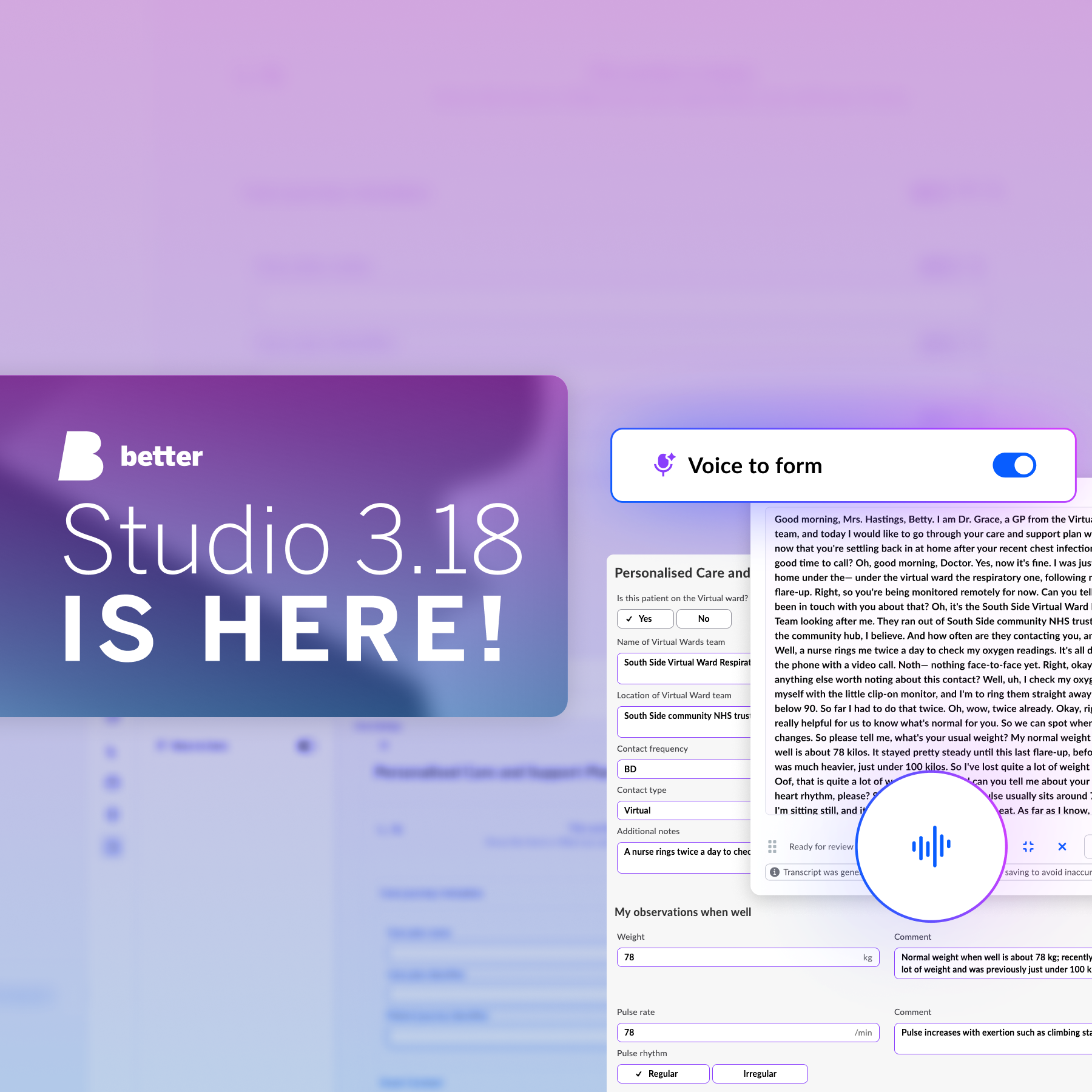
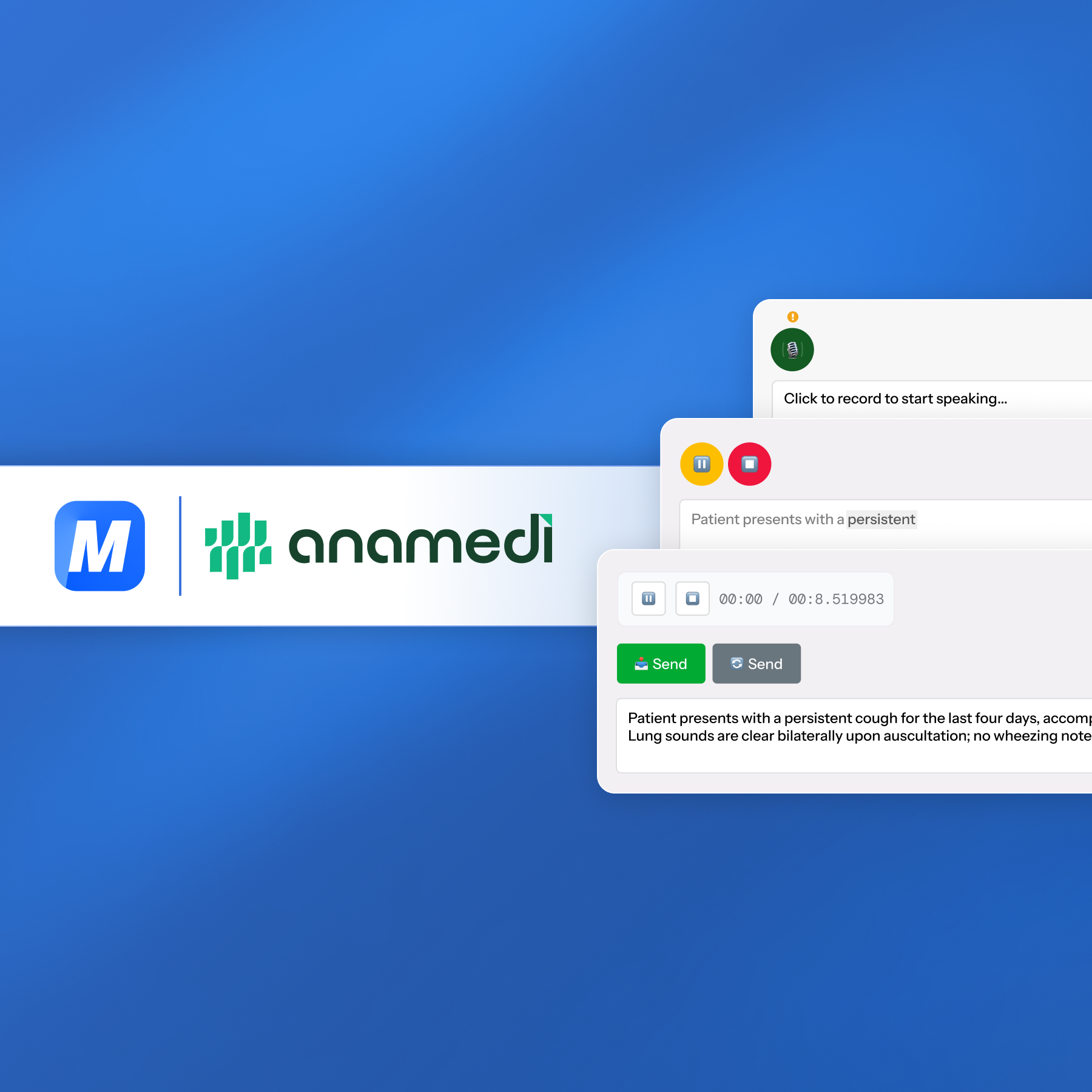
Anamedi Voice Forms takes voice documentation beyond transcription by mapping spoken information directly into structured clinical forms. Rather than introducing a separate documentation workflow, Voice Forms integrates directly into the Form Builder in Better Studio as a widget.
During ward rounds, admission assessments, and structured clinical evaluations, clinicians can speak naturally while the solution automatically captures, transcribes and maps the information to the relevant form fields.
Clinicians can continue working with the same forms, workflows, and archetypes they already use. Because the underlying form structure remains unchanged, organisations can introduce voice documentation without redesigning their clinical content.
The goal is not simply to make documentation faster. It is to make structured clinical data easier to capture at the point of care.
Voice documentation for real-world clinical workflows
Anamedi Voice Forms is designed to fit into existing clinical workflows rather than replacing them.
Key capabilities include:
- Automatic field population: spoken information is transcribed and mapped directly to the relevant fields within the form.
- Multilingual support: enabling voice documentation across different languages and clinical environments.
- Form Builder integration: organisations can introduce voice documentation without redesigning existing forms or archetypes.
- Structured data capture: information remains usable for reporting, analytics, care coordination, and operational processes rather than becoming unstructured free text.
By preserving existing form structures while simplifying data entry, Voice Forms helps organisations reduce documentation burden without sacrificing data quality or consistency.
From documentation to connected care
Clinicians already capture the information healthcare needs during consultations, assessments, and patient interactions. The challenge is turning those conversations into structured clinical data without adding to the documentation burden.
Voice documentation helps close that gap. By making it easier to capture structured information at the point of care, solutions like Anamedi Voice Forms allow clinicians to spend less time completing forms and more time focusing on patients.
At Better, we believe healthcare data should be captured once and structured for reuse across care, operations, and decision-making. Anamedi Voice Forms supports that vision by helping organisations transform clinical conversations into structured data that can be used and reused across the healthcare ecosystem.
Discover Anamedi Voice Forms on Better Marketplace.
Partner with Better
Access a growing healthcare ecosystem built on open standards and expert support.