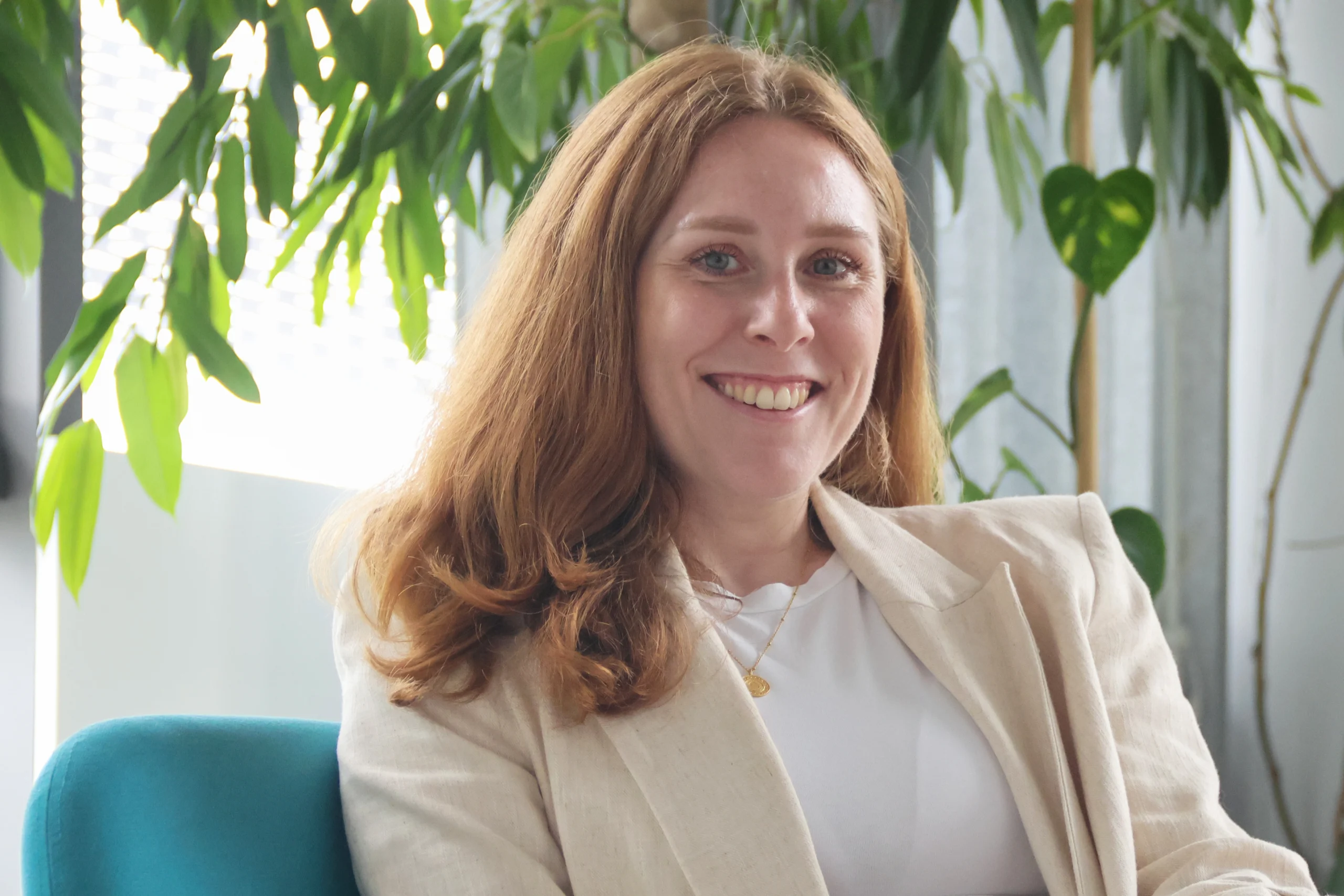

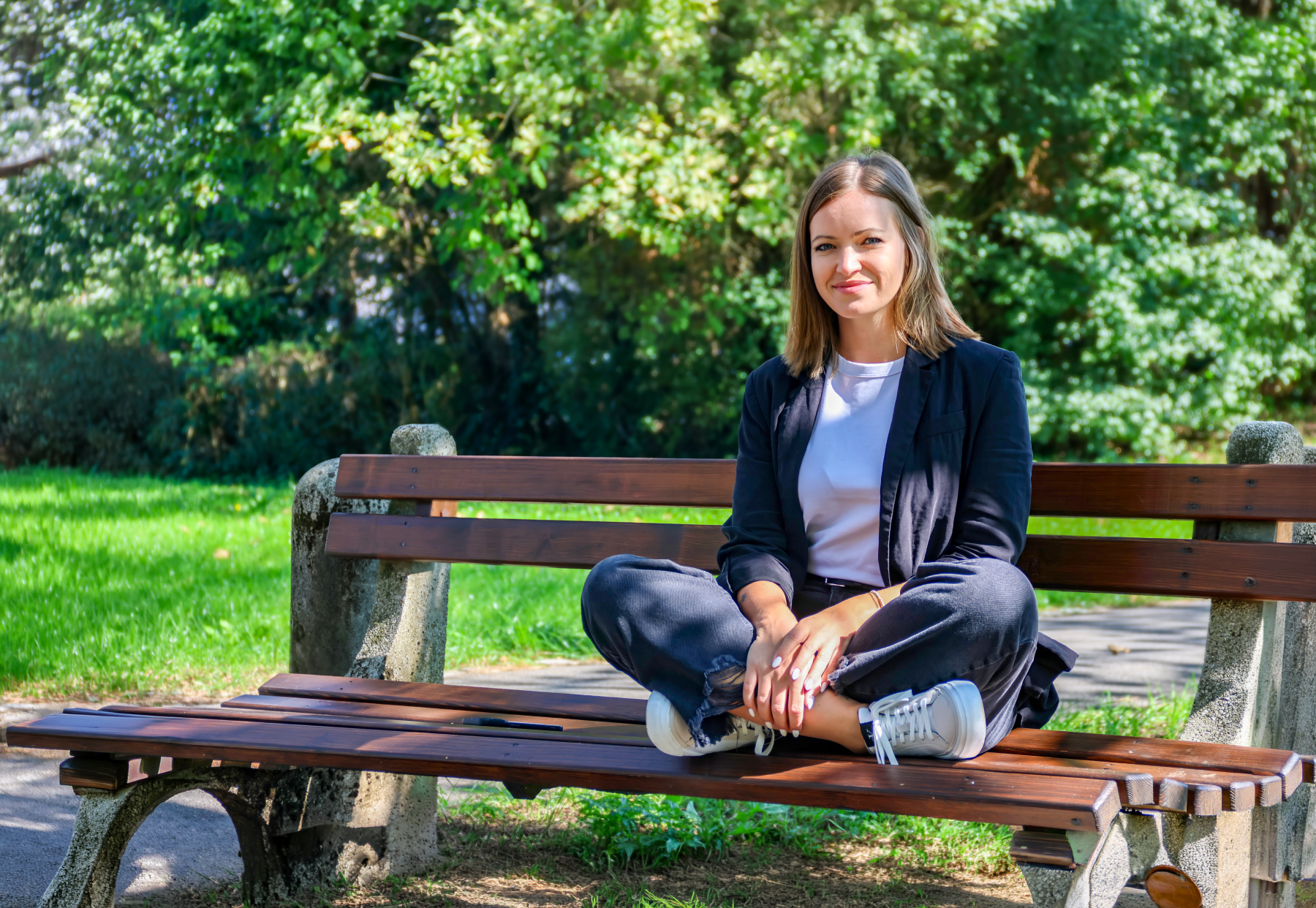
“The real value of design is understanding the problem, bringing different perspectives together, and deciding what actually needs to be built, what can be built, and what is worth building,” is how Silvija Gregorčič, our Better Meds Design Lead, sees the value of design in healthcare.
As the design lead, Silvija spends most of her days allocating and reviewing work and helping others with their challenges. She said that what makes designing for healthcare different from other types of digital products is the responsibility that comes with it. “I try to be very deliberate about understanding not only whether something works, but also what could happen if it is misunderstood, overlooked, or used differently than we expected,” she explained. As a travel enthusiast with hiking to Everest Base Camp on her bucket list, she sees Better as a place of many opportunities and great people. Get to know Silvija in the interview below.
You are leading the design team at our medication management product, Better Meds. How does your typical working day look like?
Most days start with meetings and end with trying to turn all those conversations into something tangible. Over the last few years, my role has shifted more towards steering things: allocating and reviewing work and helping others with their challenges. A lot of my day revolves around understanding what different people and teams need, connecting the right people, and helping things move forward.
And then there are the unexpected questions from design or other teams that send me down a research rabbit hole. I genuinely enjoy those. I also enjoy days with our company-wide design review. I like seeing how other product teams approach problems because very often someone has already solved a problem another team is struggling with.
What made you choose healthcare as the space in which you wanted to apply your design skills, and what makes designing for healthcare different from designing for other types of digital products?
The funny thing is that I actually get quite lightheaded when it comes to hospitals, doctors, and needles, so my parents were quite entertained by the idea of me having to follow clinicians around hospitals as they do their work. Before joining Better, I had already worked on a healthcare-related project. I was drawn to healthcare because I liked the challenge of understanding something complex well enough that you could actually start thinking about how to make it simpler.
What makes designing for healthcare different from other types of digital products is the responsibility behind the design. For example, showing all relevant data in healthcare is crucial for successful patient care, but we also need to be very aware of clinicians’ cognitive load. We have to be very deliberate about what information we show, when we show it, and how we present it. Putting everything on the screen might mean nothing is technically missing, but it doesn’t necessarily make the product better.
Your work covers everything from research and user testing to user flows, information architecture, and prototyping. Which part of the design process do you find most fascinating, and why?
My favourite part is probably the final stretch, when we decide on the final scope of the solution. By then, we have a lot of knowledge about the topic, we’ve heard from users, and the technical team has challenged some of our assumptions. I enjoy bringing all these perspectives together and figuring out what the solution should actually be.
It’s a bit of a puzzle, but it’s also very collaborative, since we’re getting different perspectives into the room. There is almost always something you haven’t considered yet, which keeps my curiosity going. The best design decisions happen where different perspectives meet, and I think the designer often ends up being the connector between all those inputs, helping turn them into one coherent solution.
A big part of your role is also bringing together different perspectives, from designers and developers to product people and healthcare professionals. How do you turn many different opinions into one clear direction?
I try not to think of it as figuring out who is right. Different people are looking at the same problem from different perspectives, with different priorities and constraints. My job isn’t to find out who’s right. It’s to find a way forward that makes sense. Sometimes that means talking to the people involved and finding a compromise. Sometimes it means reducing the scope or finding a workaround. And sometimes the easiest way to resolve a disagreement is simply to put the idea into a prototype. Once everyone is looking at the same thing, the conversation usually becomes much more concrete. We can all see the same thing, react to it, and move the conversation forward. It’s all about finding a pragmatic way forward without losing sight of what the feature has to achieve. I have also learned not to take disagreements too personally. People bring different perspectives and different ways of looking at the same problem. That is part of what makes collaboration interesting.
Better Meds is used in environments where a small design decision can have a real impact on how clinicians work and potentially on patient safety. Does that responsibility change the way you approach design?
Yes, definitely. When you are designing something that clinicians use to make decisions about patient care, you have to be much more conscious of the potential consequences of a design decision. There is less room for assumptions, and I think that makes user testing and validation particularly important. I try to be very deliberate about understanding not only whether something works, but also what could happen if it is misunderstood, overlooked, or used differently than we expected. That means thinking about edge cases, prioritising the information that matters most, and making sure important things are clear at the right moment. For me, good healthcare design is not just about making something easy to use. It’s about making it safe and reliable to use in the real environment where people actually work.
You have moved from being a product designer to now leading a team of designers. What has this transition taught you about yourself, and what kind of leader are you working towards becoming?
I still love solving problems, but I have realised I really enjoy helping other people solve them, too. The transition into leadership has made me think less about owning the solution myself and more about creating the conditions for others to do their best work. For me, that means giving people ownership of their decisions and responsibility for their work, while making sure they have someone to turn to when they need help. I want people to feel comfortable saying “I don’t know”, asking for help, or telling me when they disagree. I also want to help people discover what they are good at and give them room to develop that. I think that’s probably the part of leadership I find most rewarding.
You said that progress happens at the intersection of different kinds of knowledge and ways of thinking. What have you learned from people outside your own field that has changed the way you work?
I think almost everything I learn outside design changes the way I work. Working closely with developers, for example, taught me how valuable it is to understand technical constraints early. If you understand what is realistically possible before building the whole solution around an idea, you can spend more time actually solving the problem. It also leaves more room for other teams to contribute to the solution.
Healthcare has taught me something else: it’s a marathon, not a sprint. As designers, we naturally want to build the best possible solution, which has led to an internal joke that our first idea is usually a spaceship. But not every problem needs a spaceship. Sometimes a light aircraft gets you exactly where you need to go. The important thing is that the light aircraft shouldn’t become the end of the journey. If we’re dreaming about the moon, we still need to keep building towards it. For me, that’s the balance: solve the biggest pain point first, without losing sight of the bigger vision.
Looking ahead, what would you like to be able to influence in the next few years?
I’d like to see design have a stronger voice in product strategy and help build an even stronger design practice across Better. I think the role of designer is going to change quite significantly in the coming years. AI is making prototyping accessible to almost everyone, which is exciting. But I don’t think that makes design less important, since the real value of design was never just assembling screens. It’s understanding the problem, bringing different perspectives together, and deciding what actually needs to be built, what can be built, and what is worth building. I think designers will increasingly need to bring a broader set of skills to the table: more research, deeper problem solving, and stronger product thinking. I’d like to help strengthen that view of design at Better and see designers recognised as problem solvers with a broad set of skills, not just people who make prototypes.
What do you enjoy doing in your free time? What gives you energy, keeps you curious, and helps you switch off?
I enjoy traveling. I always plan my own trips, and they are often intense enough that I usually need a holiday after the holiday. I like putting myself somewhere unfamiliar, figuring things out, trying local food, wandering around cities, hiking, and generally doing a bit of everything. Not speaking the language or even being able to read the signs definitely puts your problem-solving skills to the test, which I apparently enjoy even when I’m not working. I also have a fairly long bucket list of things to see and experience. At the moment, hiking to Everest Base Camp or around Annapurna is high on it, and hopefully one of them will happen in the next couple of years.
What does Better mean to you?
For me, Better is a place of opportunities. Opportunities to build my knowledge and skills, share my work and thinking with others, and explore new ideas. I’ve had the chance to present at conferences, help shape our design practice, and work on things I genuinely care about. A lot of what gives me energy comes from the people around me, who introduce me to new things, challenge my thinking, and spark my curiosity. I’m more than proud to call some of them my friends.