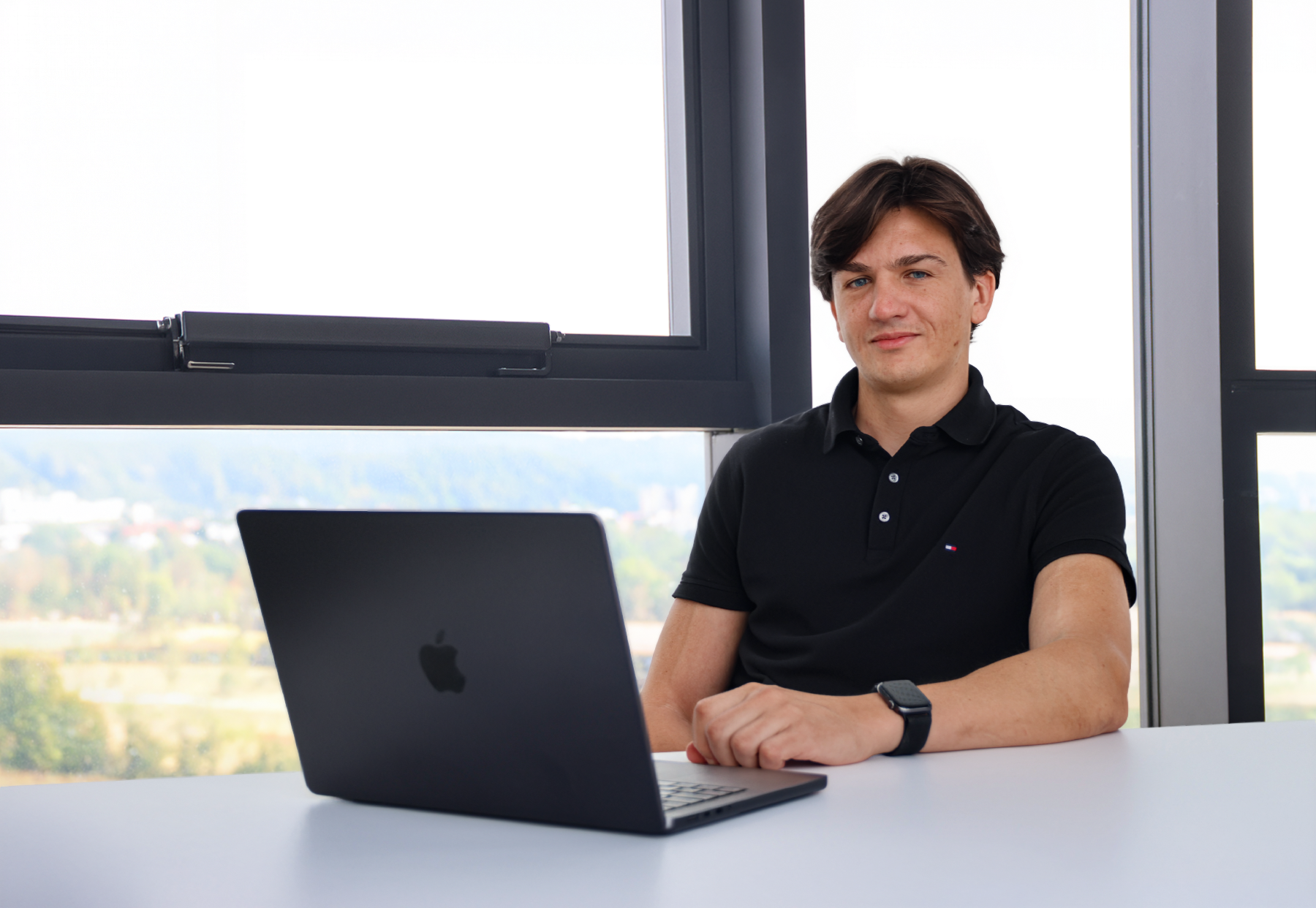


“What people get wrong about the designer’s role is that it looks like it’s all about interfaces. It isn’t. We have to understand the changes it brings to how people work, how they decide, and how they cope when something goes wrong,” said Tadej Maligoj.
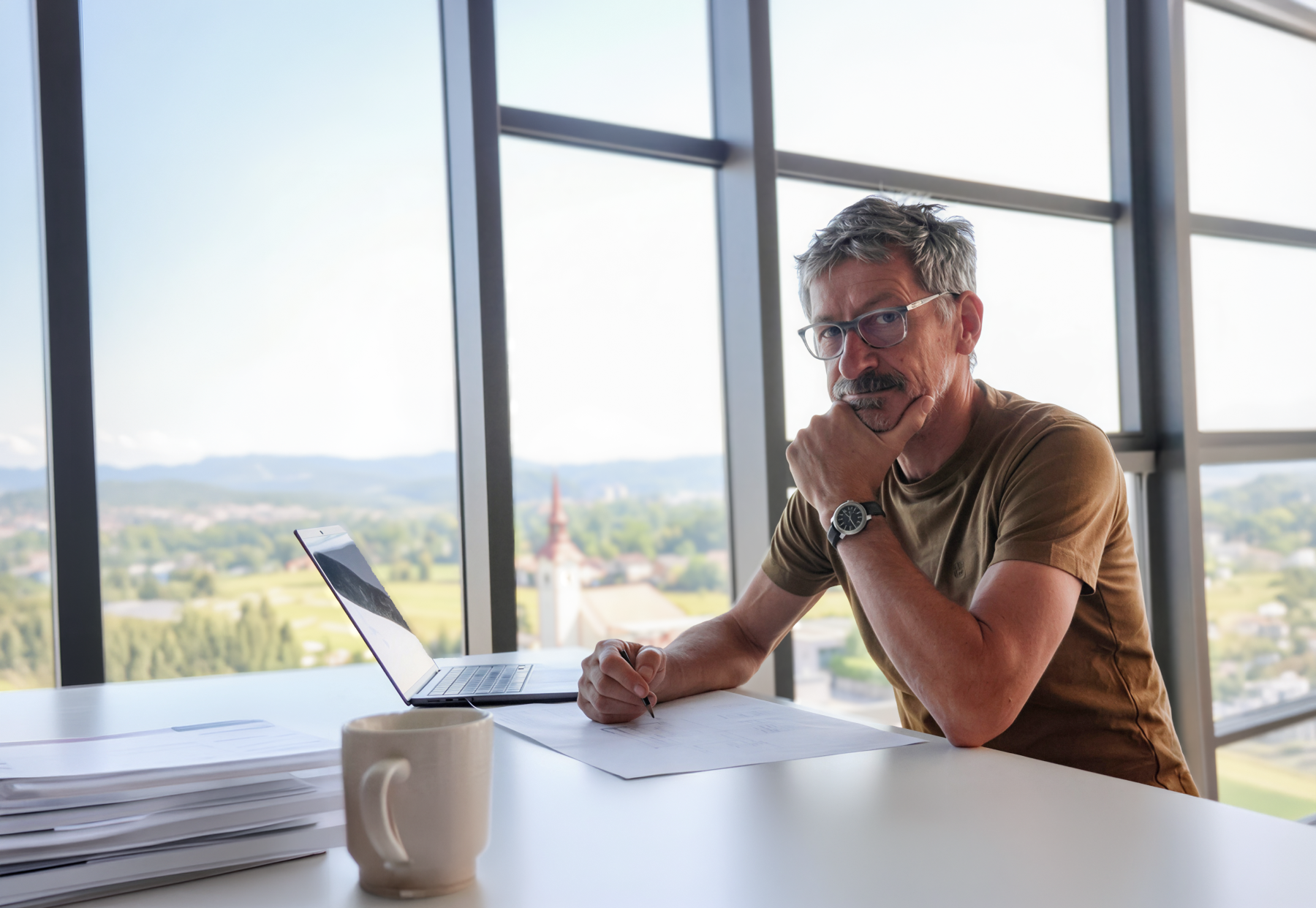
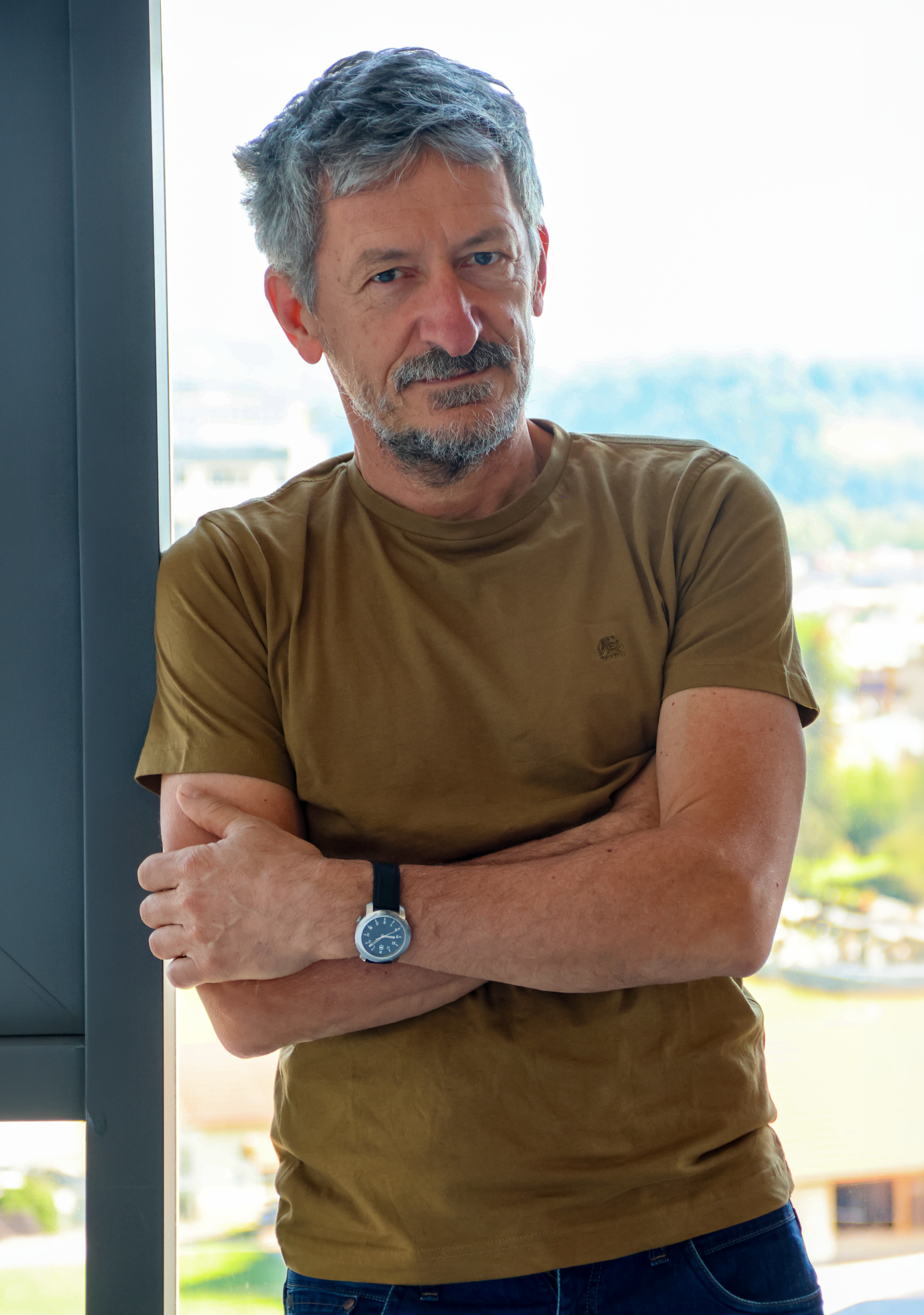
Tadej Maligoj is a Senior UX Architect in our Studio team. He builds user interfaces, and he does it with years of experience, attention to detail, a clinical user in mind, and an understanding of the importance of good data. He has been with Better for many years, has influenced many of the products and solutions, and this is how he sees the work Better is doing: “We’ve raised the level so gradually that we don’t notice how ambitious the work has become, but if someone had shown us today’s work a few years ago, it would probably frighten us”. As a long-time mentor, Tadej’s most important advice is to always challenge the solution before accepting the problem as given. Read the interview and get to know Tadej, his approach to work, and his many interesting hobbies better.
You work as a Senior UX Architect with the Studio team. What does your typical working day look like?
It starts with reading. Specifications, tasks, emails, chats, whatever changed in a late-evening session the night before. Recent projects we are working on are very complex and move fast. Then I build a dynamic, clickable model of the user interface that people can actually try, navigate through, and react to. That is the fastest way to check whether everyone involved in building the application is talking about the same thing. A model is a great thinking tool as it shows the holes in an idea and you can’t fake it.
That approach has worked for me for decades. What has changed is the way I do it. I used to spend weeks building a proper interactive model with a wide variety of graphic design tools that were never really built for dynamic modelling. Now I take screenshots and describe the interaction with an AI assistant, and a few hours later, I have a usable model. The mental work is the same, but the speed has changed. The loop between having an idea and testing it is much shorter.
What has changed my work even more is teamwork. Being a part of a development team, we designers at Better also meet on a regular basis in show-and-tells, design reviews, learning time. I have learned not to take it for granted: Better keeps more designers close to the development than almost any software company I know, and the most useful feedback comes from someone who sees the problem in the same way. It helps more than it sounds, and when you are the one arguing for “another unneeded feature,” it is a relief not to be the only one who believes it matters.
User experience is often described as something users only notice when it’s missing. What, in your opinion, makes a truly great healthcare user experience?
The most painful part of informatisation is still the data entry. We know how to store data, move it between systems, and we know how to protect it. But the hardest part still falls on a person: turning the reality of the work-as-done into the highly structured data a computer wants. Pressure on us comes from two sides. Our primary users, doctors, nurses, and other clinical staff, want the simplest possible experience; the institutions, as organisers of the national health system, want as much data as possible. So, we are forever looking for a compromise, and part of my job is also to push back sometimes. I call myself a user advocate, because someone in the room has to be the voice of the person who will actually use the thing.
What people get wrong about the designer’s role is that it looks like it’s all about interfaces. It isn’t. Using and feeding the information system is only one part of someone’s working day, especially in healthcare. We have to understand the changes it brings to how people work, how they decide, and how they cope when something goes wrong.
You have been part of Better for more than two decades. Looking back, what are some of the biggest changes you have seen in digital healthcare and in the company?
In the beginning, software companies were moving work processes from paper to the digital world. It looked difficult. A lot had to be invented, but that also gave us the freedom to explore ideas and set the direction.
It turned out to be much harder to upgrade organisations that already run on some kind of information system. Bad software teaches people bad habits. Over years of use, people optimise their workarounds, so the system stops supporting their clinical work and starts getting in the way of it. So when you sit down to gather specifications, you are not capturing how care is actually delivered, but the compromises they made because of the digitalisation. A lot of this work is already set in stone, and breaking through that is one of the hardest things we do.
You have extensive knowledge of healthcare workflows and clinical processes. How important is it for designers to understand the real-world environment in which their products are used?
Hospitals as organisations are difficult to enter as an outsider because of patient privacy, clinical sensitivity, and institutional caution. So designers should take every chance they are given sneak in, because the reality in hospitals is far more specific and complex than any imagination.On the other hand, what you experience in-house has to be abstracted carefully. Every physician has their own approach. Even two doctors in neighbouring offices will do things differently, and you really can’t tell either of them they are doing it wrong. Which means that knowledge and procedures from one case don’t transfer directly to the next. What do transfers are principles and human patterns. How people handle uncertainty, how they cut corners under pressure, and how they protect themselves from a system that doesn’t quite fit, these are universal. That’s what you carry forward.
Nevertheless, I find people in healthcare extraordinary. They handle the hardest moments of people’s lives, caught between their oaths, institutional pressure, money, and their own lives, making difficult decisions every single day. I cannot not admire that.
You have influenced many of Better’s products in the past years. Which projects are you particularly proud of, and why? What were some of the biggest challenges you faced with these projects?
There is one project that stayed with me more than the rest: Pathfinder, a clinical registry application. It started small but grew as it was adopted for one kind of registry after another. More and more types of data and functionalities were added until it became a miniature patient record.
That gradual growth gave us the chance to develop a different idea of navigation. No one reads a patient’s history front to back. Physicians move around it according to the context and the patient in front of them, and that path is hard to predict. So we built an interface that never runs into a dead end, that hides the rigid, hierarchical structure of the data behind a fluid surface, and adapts itself to the clinician’s current task and focus. It felt right for the way clinicians move through a patient’s data.
We built many models, and the concept went into a few real projects. It was also recognised by a Red Dot award. But then it went into a drawer. It proved too hard to scale up to large projects; it was probably too far ahead of its time.
With AI becoming part of more and more digital products, how do you see the relationship between AI and user experience evolving in healthcare?
Western medicine is built on data and statistics, so an AI assistant in dealing with it is a natural fit. We couldn’t avoid it now even if we wanted to, so Pandora’s box is open. Our job as UX designers is to keep clear which part of the work is human and which is the AI’s. Mentioned that, clinical decision-making is not where AI should be seamlessly integrated into the process. Much better opportunity for assistance lays in the administration, the documentation, the coordination, the things that keep pulling physicians away from patients. That is where AI can help and should help first. If we manage to bring AI to the administrative and clerical work, it could give clinicians back the one thing they never have enough of: time with the person in front of them.
You have also mentored generations of designers at Better. Why do you think mentoring is important, and what lessons are you passing most often to younger colleagues?
The most important thing I try to pass on is simple: challenge the solution before you accept the problem description as given. When there is a new task or a problem, everyone wants to provide an answer, because offering a solution feels productive, and asking why the problem exists only slows things down. But “why” is the only question that matters; “what,” “how”, and “for whom” all follow. Without it, you lose the chance to rethink, to simplify, to make something better, not just different. Without challenging the definition of the problem, the path of the solution might slide into the auto-pilot mode too soon. Design is then only an execution of the technical solution without a chance for improvement. In software development, the first line of code becomes legacy the moment it’s written, and the possibilities of the solution narrow. I’m not sure everyone wants to hear it, but I keep and will keep saying it.
Outside of work, sports are a very important part of your life. What does sport give you every day, and what attracts you to these challenges?
‘Zdrav duh v zdravem telesu.’ I believe that mind and body are one, they influence each other. Good physical condition gives me confidence at work and everywhere else.
I can’t really explain why it became so extreme in my case. Hard work and hard sport seem to feed each other: gradually, the threshold moves. And from inside the effort, it’s never as frightening as it looked from outside. I think Better works the same way. We’ve raised the level so gradually that we don’t notice how ambitious the work has become, but if someone had shown us today’s work a few years ago, it would probably frighten us. That’s how you do hard things. Sometimes it helps when fog is hiding the mountain in front of you.
Long-distance running and UX design both require patience and attention to detail. Do you see any similarities between the two?
Patience, yes. Attention to detail too, somehow. You want each step to be good enough that you don’t lose your balance and fall. But the truer similarity is that neither is a spectacular discipline. Long-distance races aren’t run in stadiums, and no one live-streams them. UX is the same. There’s a design award for almost every piece of graphic design, and yet most people don’t know what a UX designer does, or that the role exists at all. So, it has to be a passion. It isn’t work you do to be seen, or to win a prize for, you do it because the problem is worth solving. And the better you do it, the less anyone notices.
You have documented many of your adventures through your photography blog. What makes a moment worth capturing for you?
I have built a few houses. I have raised a son. I am about to plant a tree. And I am writing a book, through the blog. It began as letters to my mother. She loved to travel, until she no longer could, so I brought the outside world back to her in writing, from my emotional highs of a journey, some crazy adventure, or just everyday happenings. At the moment, I write mostly to remember.
When I first made it public, I promised myself one thing: to be honest about the bad days as well as the good, about the hesitation, the doubts, the bad luck, the failures, and the small victories. Not just the “look how great I am” version. That felt even more worth doing as I watched where things were heading with the curated success stories on Facebook, LinkedIn, and Strava. My honesty is a small counterweight to all the beautiful, clever, endlessly successful people there, the ones who leave the rest of us feeling worse.
These days I have less time for adventures, so I write about my living on the construction site instead. It is the same story, really, a long course, with its many obstacles and plenty of time to think about the meaning of life.
What does Better mean to you?
I don’t hike in nature. I run a hundred miles across mountains. Better is the same. Problems that are genuinely new, an industry that allows no simple solutions, where design is always a matter of balancing compromises. I’m not here because it’s comfortable. I’m here because it’s hard. And I don’t watch series.